
Shadow AI: Definition, Risks and Solutions for SMBs
Shadow AI is employees' unsanctioned use of AI. Definition, concrete risks and an action plan to take back control.
Shadow AI is employees' use of artificial intelligence tools without the company's approval or framework, most often through personal accounts. It has become one of the most critical blind spots in the digital transformation of SMBs: generative AI tools are spreading faster than leadership can put guardrails around them. Here's what it is, the real risks, and how to take back control without holding your teams back.
In short
- Shadow AI is employees' use of AI tools without the company's approval or framework, most often through personal accounts.
- Main risks: confidential data leaks, GDPR non-compliance, unverified answers and dependence.
- The right response isn't to ban it but to map usage, publish a policy and offer secure alternatives.
What is Shadow AI?
Shadow AI covers any use of AI tools (ChatGPT, Gemini, content generation assistants) without the company's approval or oversight. It extends the concept of Shadow IT, well known to IT departments, to generative AI tools. In practice: a salesperson who writes proposals in ChatGPT from a personal account, an assistant who pastes confidential meeting minutes into a free tool, a developer who submits proprietary code to an external AI.
Why is it spreading so fast?
Three reasons. The tools are free, available from any browser, and deliver an immediate productivity gain. Faced with a concrete need and a real workload, employees don't wait for an official framework: they use what works, now. It's not bad faith; it's a pragmatic response to the lack of an approved tool.
That's also why Shadow AI is already widespread. In our assessments, a large majority of employees say they use AI, most often without a framework. So AI isn't a project to launch someday: it's already inside your walls.
The concrete risks of Shadow AI
| Risk | What it involves |
|---|---|
| Data leaks | Confidential information (contracts, customer data, source code) sent to third-party services |
| Non-compliance | Potential violations of GDPR and the EU AI Act, with no legal basis or traceability |
| Quality | Unverified answers built into documents or decisions |
| Dependence | Processes relying on tools the company doesn't control, with no guaranteed continuity |
| Security | Personal accounts outside the IT department's control, with no authentication or logging |
The first and most immediate risk remains the data leak: once entered into a consumer tool, sensitive information is out of your control.
Shadow AI: a threat, but also a signal
Reducing Shadow AI to a threat would be a mistake. It reveals real business needs and high-ROI use cases that your teams identified before you did. Wherever your employees are already working around the official tools, you have your best candidates for scaling up. Read correctly, Shadow AI is a map of your AI priorities.
How to take back control in 4 steps
- Map real usage, without blaming teams. The goal is to understand who uses what, for which tasks, and with which data. That's exactly what an AI assessment does.
- Publish an acceptable-use policy that's simple and readable: which tools are allowed, which data must never be submitted, which habits to adopt. One clear page beats an unreadable rulebook.
- Offer secure official alternatives: enterprise plans that guarantee your data won't be reused. See our selection of AI tools for SMBs and the Copilot vs ChatGPT vs Claude comparison.
- Train employees in good habits: what they can do, what they mustn't, how to check an answer. Managed adoption replaces hidden use.
Conclusion
Rather than banning it, the most mature SMBs turn Shadow AI into an official AI policy. It's often one of the first things an AI assessment brings to light: the GENIAL self-assessment measures the situation objectively and prioritizes actions in a few minutes.
Take action on your AI strategy
The GENIAL AI self-assessment measures your AI maturity and gives you prioritized use cases in under 5 minutes. Free, no commitment.
Related articles
The Claude × LinkedIn Revolution
How next-gen AI agents are reinventing B2B prospecting, content and sales. The complete playbook: framework, 15 ready-to-use prompts, compliance, ROI.
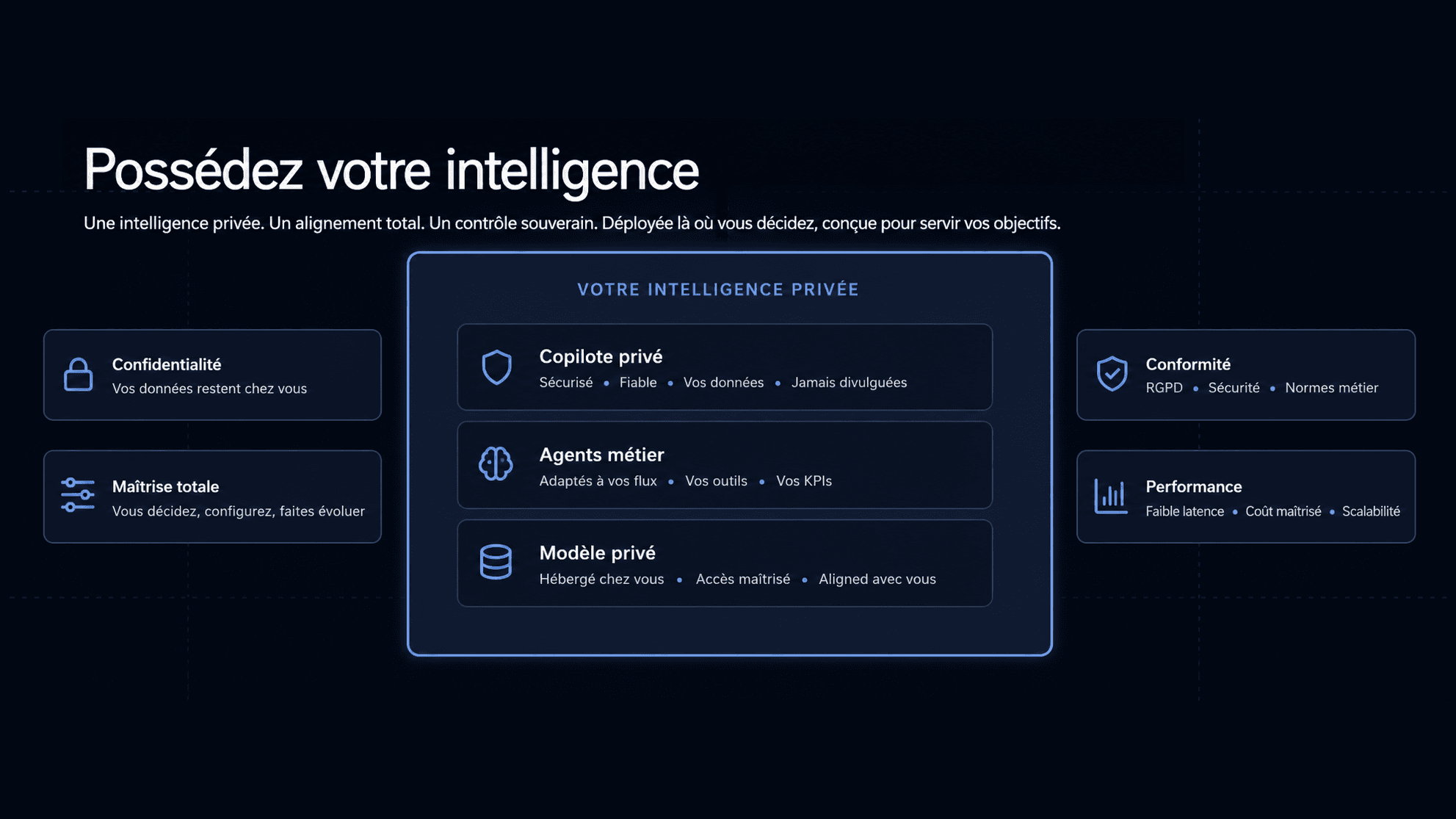
Own Your Intelligence: Sovereign AI in Practice
Renting an AI model is not owning it. What an SMB or mid-market company must control for its AI to become an asset: model, harness, context and memory.
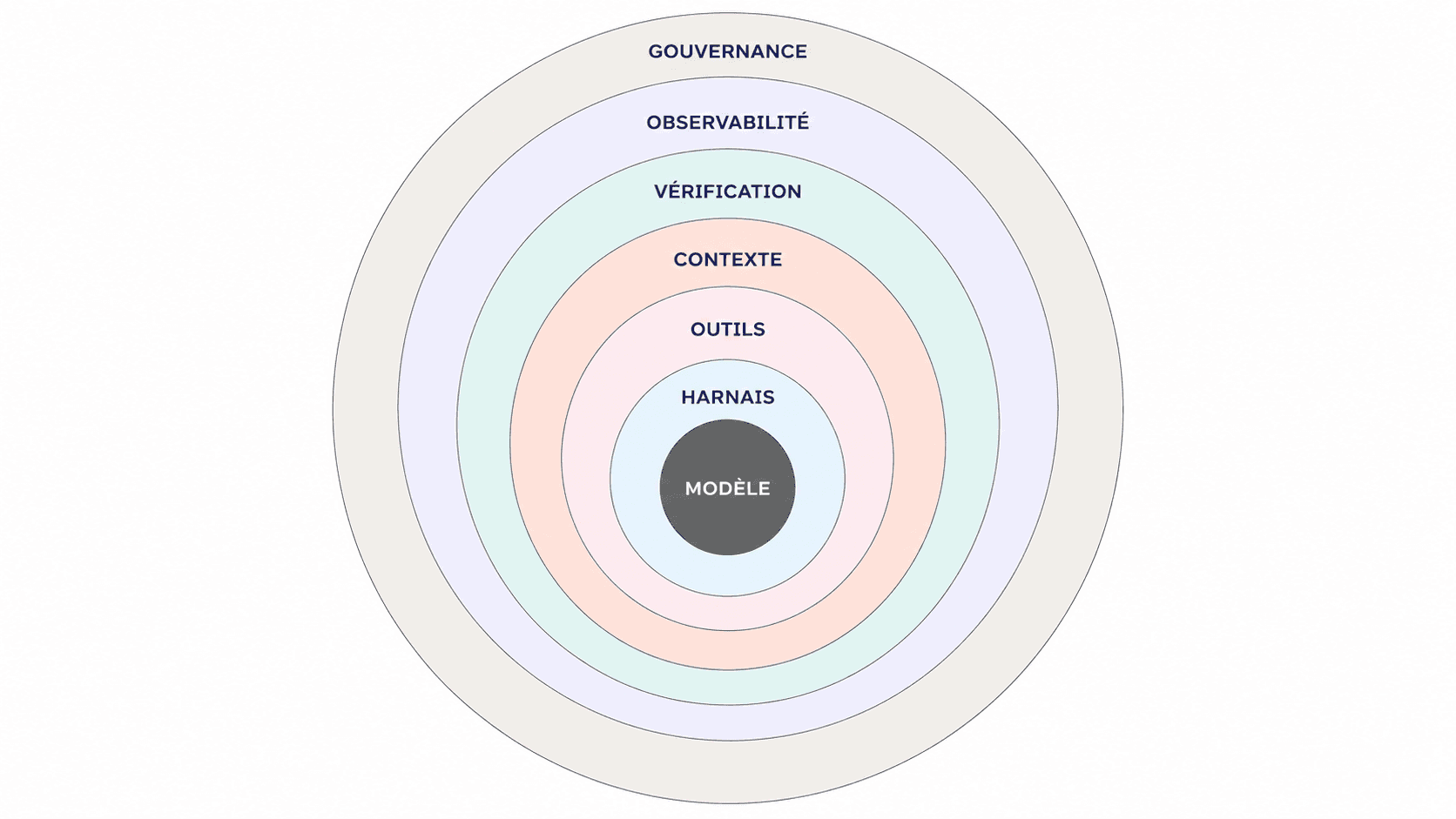
Why 95% of AI Agent Projects Fail
95% of AI agent projects deliver no ROI. The cause isn't the model, it's the engineering layer. The 5 reasons they fail and the questions to ask.