
Copilot vs ChatGPT vs Claude: Which AI Assistant for SMBs?
Microsoft Copilot, ChatGPT or Claude: which AI assistant fits your small business? A comparison of use cases, data security and pricing.
For a French small business, the best AI assistant is not the most powerful one on paper. It is the one that fits into your tools, protects your data and that your teams will actually adopt. Microsoft Copilot, ChatGPT and Claude dominate the market, but they do not meet the same needs. Here is how to decide.
At a glance
- Copilot is the obvious pick if you already run Microsoft 365; ChatGPT for versatility and its ecosystem of extensions; Claude for long documents and writing.
- Always subscribe to the business plan: it guarantees your data will not be reused for training.
- Standardize on one main assistant aligned with your IT systems, then open up specific uses to the others.
Three assistants, three different approaches
Microsoft Copilot
Copilot is built natively into Microsoft 365. It works where your data already lives: Outlook, Teams, Word, Excel, PowerPoint. For an organization on that suite, it is the most direct way to put AI in your teams' hands without changing their habits, while keeping data within the Microsoft perimeter.
ChatGPT
ChatGPT (OpenAI) is the most versatile and best known. Its strength: a large ecosystem of extensions, custom agents (GPTs) and connectors, plus a huge community. It is often the assistant your teams already use, sometimes with no guardrails.
Claude
Claude (Anthropic) is known for the quality of its writing and its ability to handle long documents (contracts, reports, knowledge bases) without losing the thread. Its approach emphasizes safety and reliable answers, a point people value for sensitive uses.
Comparison table for a small business
| Criterion | Microsoft Copilot | ChatGPT | Claude |
|---|---|---|---|
| Integration | Native to Microsoft 365 | Web, API, large ecosystem of extensions | Web, API, targeted integrations |
| Key strength | Works inside your everyday tools | Versatility and customization | Long documents, writing, reliability |
| Best for | Organizations on Microsoft 365 | Varied uses, exploration, automation | Document analysis, demanding writing |
| Data (business plan) | Stays within the Microsoft perimeter | Not reused for training | Not reused for training |
| Indicative price | ~€30 / user / month | ~€20-30 / user / month | ~€20-30 / user / month |
Indicative prices, to be checked at the time of purchase: pricing changes often.
How to choose for your context
The first criterion is not "power" but your existing environment. A simple rule works in most cases:
- You run Microsoft 365 → start with Copilot as your foundation. You build on tools people already use and you limit data sprawl.
- You want versatility (marketing, support, automation, experimentation) → ChatGPT, for its ecosystem.
- Your work revolves around long documents and writing (legal, consulting, research) → Claude.
Next come data security, cost and ease of adoption, which is often decisive: the best tool is the one your teams open every day.
Security and GDPR compliance
In every case, subscribe to the business plan. It guarantees your data will not be reused to train models and provides an appropriate contractual framework. The free consumer version does not offer these guarantees, and that is exactly what fuels Shadow AI: informal use through personal accounts that exposes your data. Rolling out a properly governed official tool is also the best defense.
Our recommendation
There is no universal winner. Standardize on one main assistant aligned with your IT systems, train your teams to use it well, then open up specific uses to the others if the need is real. Piling up subscriptions without governance is expensive and muddies adoption.
Conclusion
The best assistant is the one your teams will actually use. For a wider view, see our pick of AI tools for SMBs and the 10 AI use cases with the highest ROI for SMBs. To decide based on your real context, the GENIAL self-assessment maps your maturity and your priority use cases in a few minutes.
Take action on your AI strategy
The GENIAL AI self-assessment measures your AI maturity and gives you prioritized use cases in under 5 minutes. Free, no commitment.
Related articles
The Best AI Tools for Small Businesses in 2026
Our pick of AI tools that actually help SMBs in 2026: assistants, automation, content and data. How to choose, and the use cases that matter.
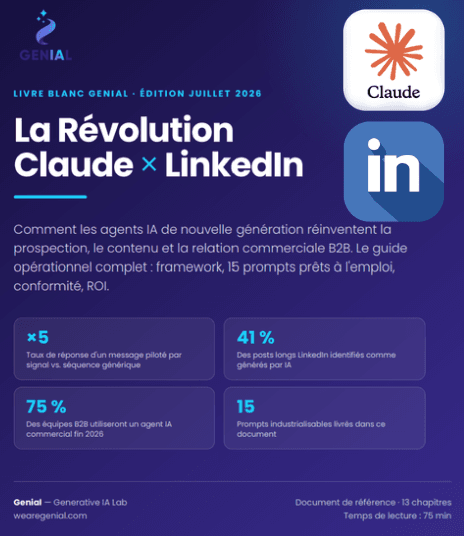
The Claude × LinkedIn Revolution
How next-gen AI agents are reinventing B2B prospecting, content and sales. The complete playbook: framework, 15 ready-to-use prompts, compliance, ROI.
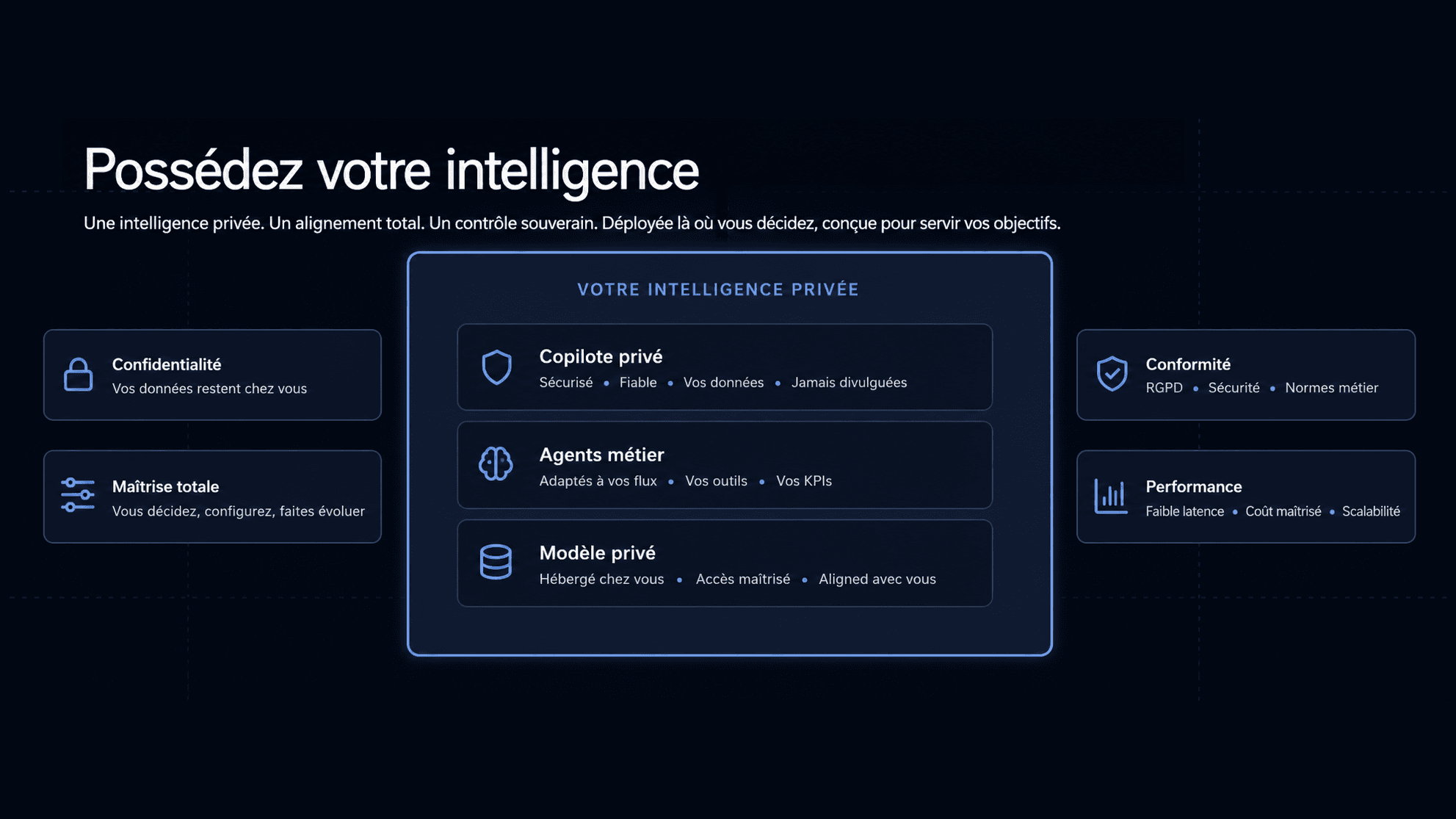
Own Your Intelligence: Sovereign AI in Practice
Renting an AI model is not owning it. What an SMB or mid-market company must control for its AI to become an asset: model, harness, context and memory.