
Why CFOs Can't Wait for Certainty in the AI Economy
Why waiting for a certain ROI has become a risk: the 3 mindset shifts CFOs need in the age of AI. An op-ed by Erwan Simon.
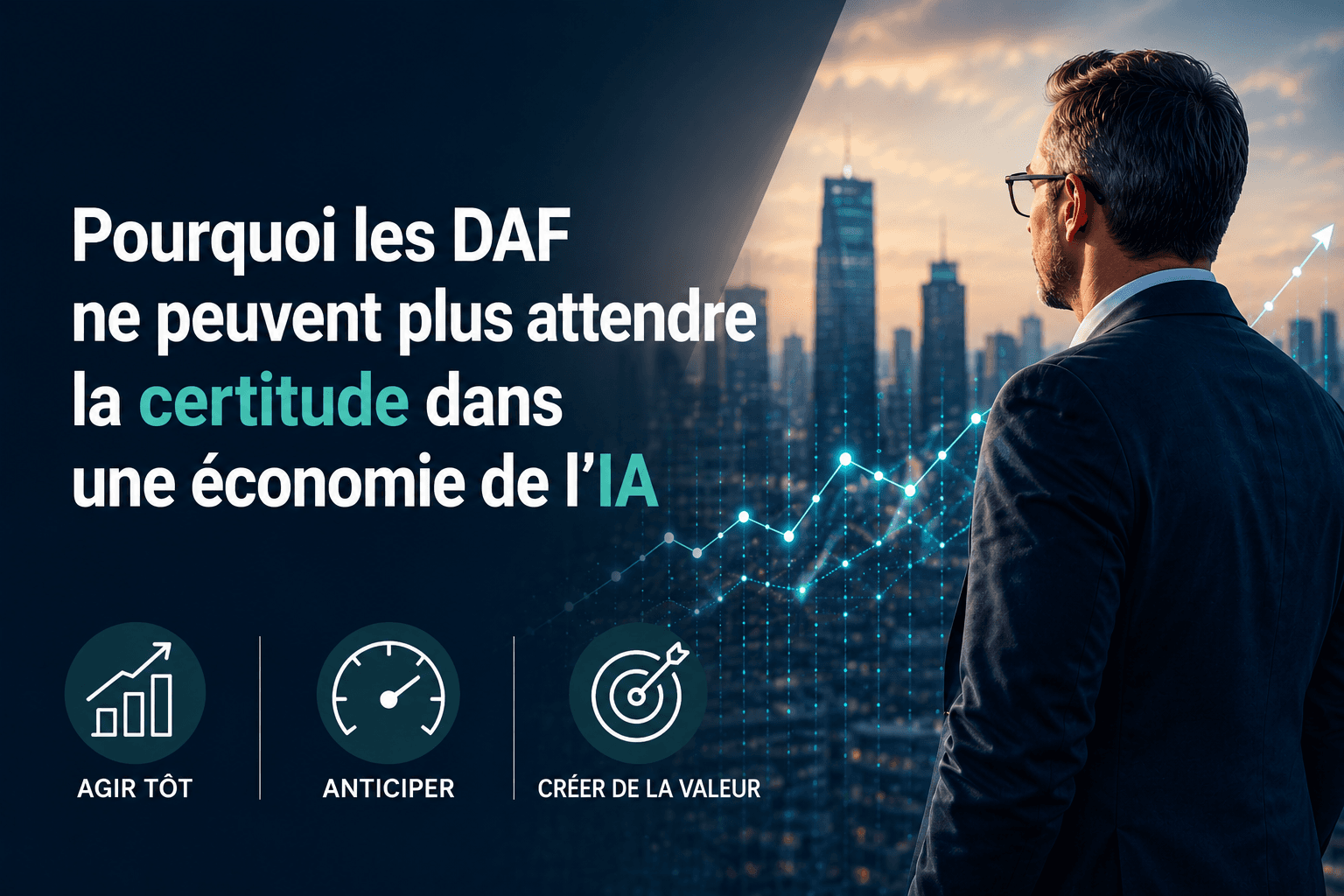
An op-ed by Erwan Simon, Bpifrance AI Expert for the "Osez l'IA" program, CEO of GENIAL
For decades, financial leadership rested on certainty. Big decisions required airtight models. Proof came first. Action followed.
AI is upending that pattern. And for CFOs, acting early now matters more than aiming for perfection.
"CFOs need to learn to be comfortable with discomfort, because ambiguity is not a reason to wait. It is a reason to design your approach to AI investment differently, not a reason to stop moving forward." — Erwan Simon
A new generation of CFOs
Traditionally, finance teams looked backward: verifying transactions, reconciling accounts, producing financial statements. That discipline remains essential.
But the age of AI demands something else. CFOs now need to look ahead: working with their peers across the company to identify AI opportunities, deciding which initiatives to fund, building a strategy, and then leading the charge.
Research confirms it: 55% of executives believe that by 2030, competitive advantage will depend more on speed of execution than on making perfect decisions.¹
Finance, with its cross-functional view of the business, can become the main engine of that strategy and that speed of execution. But it takes a change in mindset as much as in priorities.
"The CFO sits at the intersection of costs, growth, risk and capital in a way no other executive does. That gives them a complete view of how the business really works." — Erwan Simon
To make the most of that unique position, three mindset shifts are needed.
"You are no longer just closing the books and managing risk. You are actively architecting future performance while protecting today's results." — Erwan Simon
1. From reporter to architect
Moving from explaining past variances to designing the financial structures, funding models and metrics that turn AI ambition into execution.
2. From gatekeeper to accelerator
Creating financial conditions that support experimentation (portfolio funding, stage-gated investment and learning-based metrics) instead of approving spending one initiative at a time.
3. From functional leader to enterprise strategist
Acting as a peer to the CEO, CIO, COO, CHRO and Chief AI or Data Officer to prioritize, govern and deploy AI across the entire company.
AI is not (yet) a question of ROI
One question comes up in almost every finance conversation today: "What do we fund when the value is real but the ROI isn't clear?"
The instinct to wait for sharper numbers, more data and more certainty is understandable. But with AI, it is also dangerous.
"By the time you get certainty, the competitors who didn't wait will have built a considerable lead." — Erwan Simon
The most forward-looking CFOs are moving away from one-off, efficiency-driven investments toward AI portfolio funding models. Today, about 47% of AI spending targets efficiency; by 2030, 62% is expected to go to product, service and business model innovation.¹
How do you do it in practice?
"Think big, start small, move fast. Build confidence with early use cases, then reinvest what you learn and save into more ambitious bets." — Erwan Simon
The implication is clear: you need to fund company-wide capabilities, not isolated use cases. The mix of metrics is changing too. Adoption rate, decision speed, forecast accuracy and improved cost-to-serve become leading indicators, well before traditional financial returns appear.
Obvious ROI arrives too late
In most boardrooms, CFOs still get asked the same question: "What's the ROI?"
In a world being rapidly reshaped by AI, the question needs to be reframed: "What's the cost of waiting?"
AI is changing how work gets done, how value is created and how advantage is built. In that context, the biggest risk is not acting on imperfect financial information. It is letting uncertainty delay action. It is the same reframing of the question explored in The AI bill is the wrong question.
CEOs respond to financial exposure. So the CFO needs to quantify market share erosion and the cost of AI debt, while highlighting the threat that delayed investment poses to competitiveness, because closing that gap gets harder and more expensive over time.
"The most powerful thing a CFO can do is not to prove that AI is worth the risk. It is to show what the risk of not acting looks like in financial terms." — Erwan Simon
"We are not betting on an uncertain future. We are buying protection against likely competitive disruption." — Erwan Simon
Collaboration across the executive team
Finance cannot scale AI on its own. Success depends on collaboration across the executive team:
- With the CEO and the board: turning ambition into smart investments, bold where it matters and disciplined where it is needed.
- With the CIO and technology leaders: focusing AI spending on company-wide initiatives that generate lasting value and clear, risk-adjusted returns, rather than on isolated deployments.
- With operations leaders: making sure efficiency and productivity gains are reinvested in growth rather than quietly absorbed into the bottom line.
One of the most critical relationships, and yet one of the most overlooked, is the one between the CFO and the CHRO. Large-scale AI transformation has a direct impact on the financials and on the workforce, the biggest investment of all. By 2030, 46% of companies are more likely to rethink their organizational structure and 48% of organizations are more likely to create new roles because of AI.¹
"Reskilling, headcount adjustments, new ways of working: these are financial conversations as much as HR ones. I would add hiring too, because many potential candidates are turning to companies that take AI seriously." — Erwan Simon
The CFO also needs to model the behaviors they expect from the organization. That means operating differently: continuous planning instead of annual cycles, rolling forecasts instead of fixed targets, and AI-augmented analysis instead of manual reporting.
Uncertainty is the new normal
Enterprise AI rarely fails because the technology doesn't work. It fails because organizations move too slowly, or because of rigid funding models, outdated controls and risk aversion.
"This is not a technology transformation. It is a transformation of mindset and operating model." — Erwan Simon
The CFO's real superpower in the age of AI is not predicting the future. It is designing a company that can move through uncertainty faster than the market by making informed bets, learning quickly and scaling with confidence.
Erwan Simon is CEO and co-founder of GENIAL, a Bordeaux-based company that specializes in the operational rollout of generative AI in SMBs and mid-market companies. He is an accredited Bpifrance AI Expert (Bpifrance is France's public investment bank) and an Ambassador for its "Osez l'IA" ("Dare to use AI") program.
¹ Data from a benchmark study on AI transformation in finance departments.Take action on your AI strategy
The GENIAL AI self-assessment measures your AI maturity and gives you prioritized use cases in under 5 minutes. Free, no commitment.
Related articles
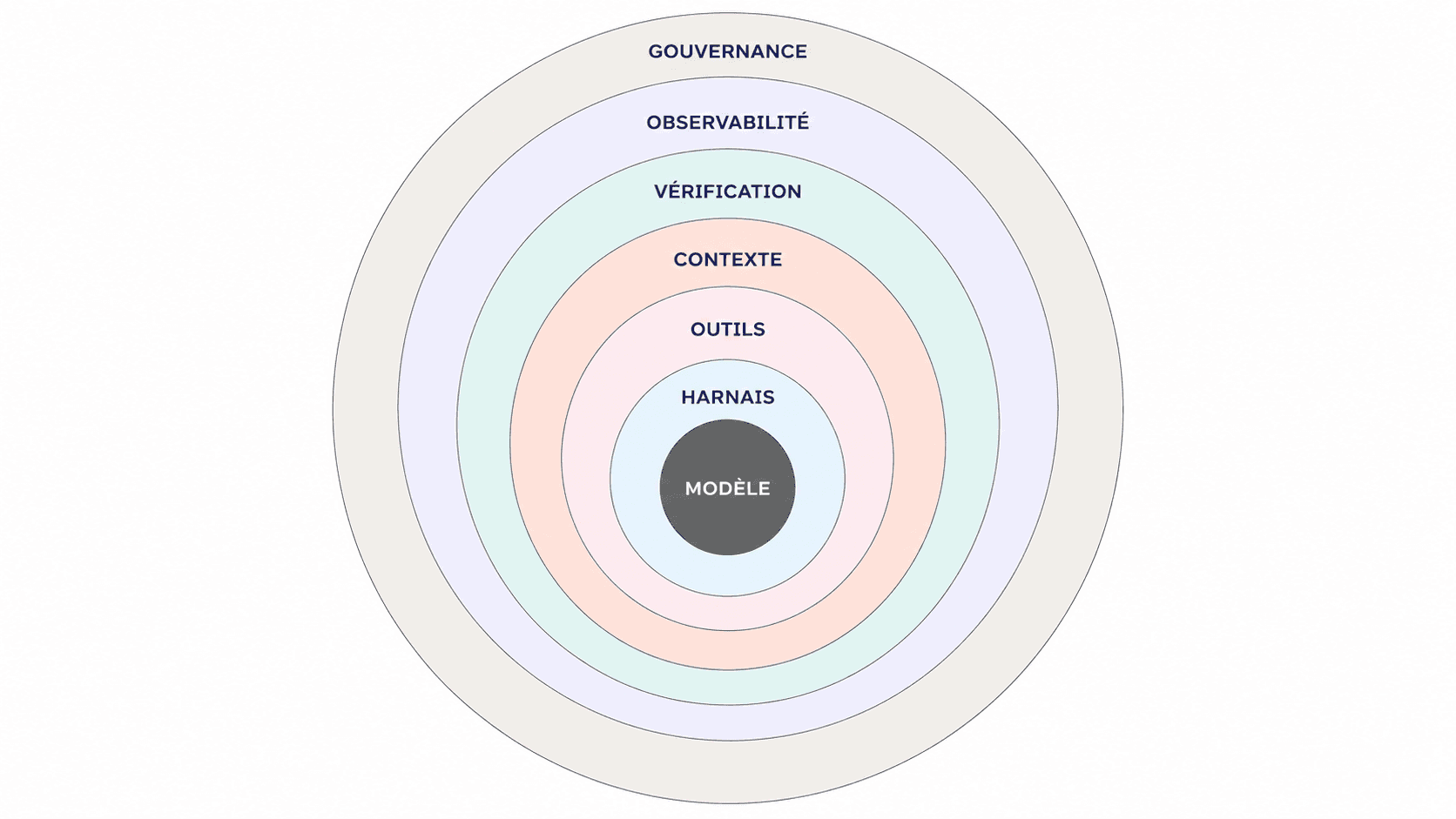
Why 95% of AI Agent Projects Fail
95% of AI agent projects deliver no ROI. The cause isn't the model, it's the engineering layer. The 5 reasons they fail and the questions to ask.

The AI Bill Is the Wrong Question
While France worries about the price per token, OpenAI and Anthropic are investing $5.5B in the human cost of AI. An op-ed by Erwan Simon, CEO of GENIAL.
How to Run an AI Assessment for Your Business
A step-by-step method for running an AI assessment in your company: scoping, employee survey, interviews, use case scoring and roadmap. A concise guide.